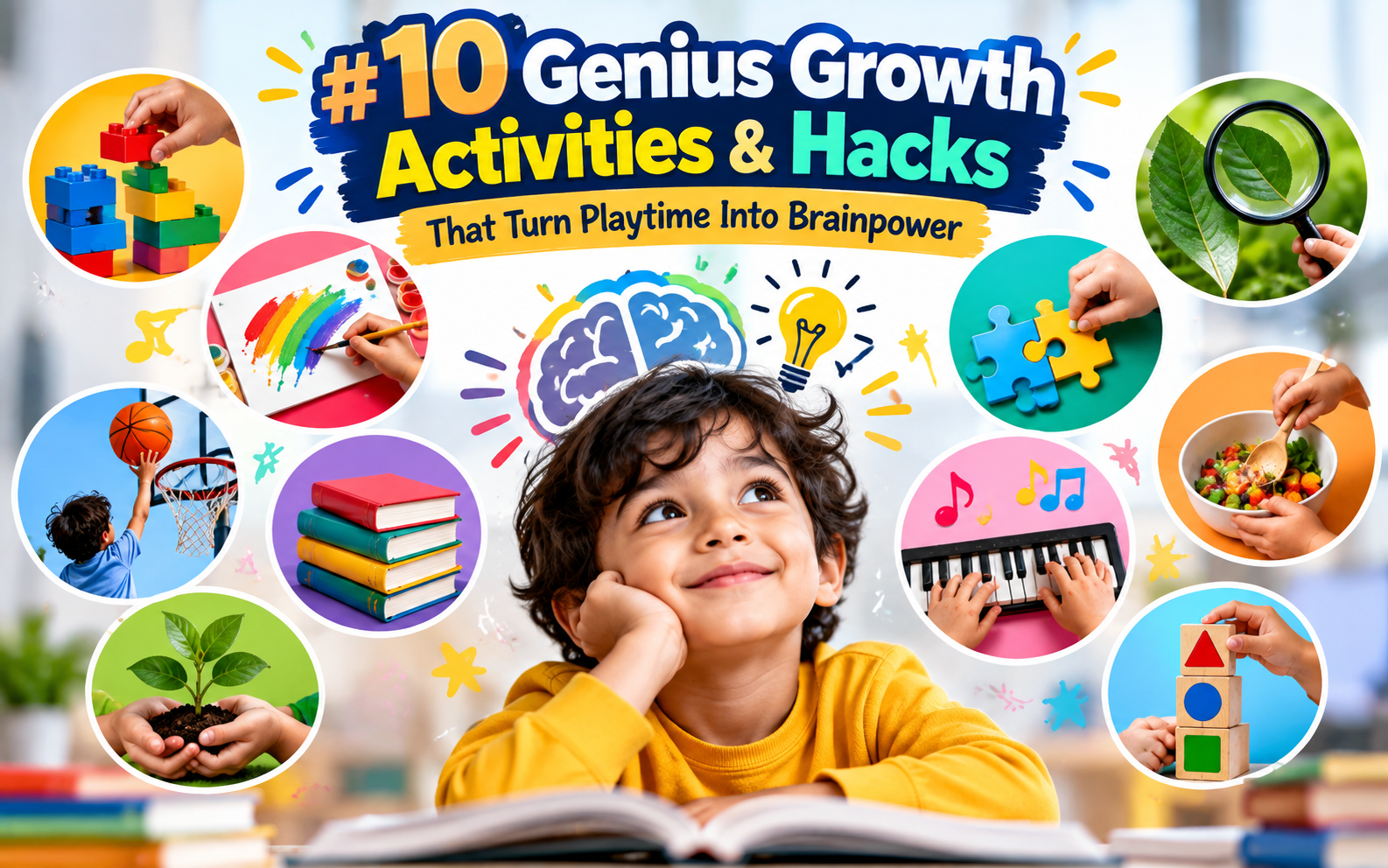
Somewhere between Pinterest perfect sensory bins, and "just give them the tablet I need ten minutes," most parents are probably thinking the same thing: am I really doing something to stimulate my child's brain development or just keeping them alive until bedtime?
Here's the good news: you don't need to spend hours (or more) in toy shops or with an educational degree to provide activities that will truly benefit your child. Here are a few of the cheaper (or already owned) things you can do to stimulate your child's brain development.
🧠 1. Boring box beats fancy toy anyday.
If you give a toddler a sixty dollar interactive robot and a box on the same day, which one will they prefer? Definitely not the \$60 toy (unless they're a fan of the word toy, they tend to dislike the word interactive).
Open-ended toys (or things) like boxes and containers can stimulate a child's brain much more than the things that come with strict guidelines. The trick is to use boxes. Let your children be creative, come up with rules for themselves, and play however they want.
🎯 2. Hide your chores in missions.
Children do not like chores. Toddlers and pre-teeners love missions. All you have to do is disguise it as something they want to do.
A task as simple as cleaning up can be transformed into a color finding mission. By disguising a chore as a mission children will not only enjoy it more, but they might actually start learning. Many basic skills such as color, spatial awareness, and more are often hidden in chores.
🧩 3. Let them fail at puzzles
If your child is struggling to fit a puzzle piece in its correct spot, do not rush to help them. Although they will eventually get frustrated and need help, struggling productively and learning to deal with the frustration is more important in the long run. Productive struggle is a term used to describe the ability to struggle well.
The trick is to count to ten (or more in some cases) in your head before helping them. This will limit the amount of time you spend helping them, while still letting them learn how to deal with frustrations.
🥄 4. Make the kitchen a math classroom
Cooking is an important skill to learn, but cooking with your child is a great way to stimulate their minds without having to do much. For example measuring ingredients helps with understanding fractions. Overall cooking is a great way to incorporate many STEM skills (Science Technology Engineering and Math) without having to put a lot of effort into it.
The trick is to give them each a job in the cooking. This will make them feel more involved and more confident.
🏃 5. Obstacle courses don't require a backyard.
You don't need a large yard to make an obstacle course (unless you have a large yard). Obstacle courses are not only a form of exercise, but they can help develop a child's gross motor skills, which are incredibly important.
The trick is to vary the courses so that they are always a little different (this will keep your child interested). You can often make one with everyday objects.
🎭 6. Pretend play is free therapy.
Pretend play allows children to rehearse real world scenarios such as the doctor, or a restaurant in a judgment free environment. By allowing them to play like this you give them the opportunity to practice important social skills.
The trick is to let them play freely, but talk to them about their play occasionally (this can be done by asking what will happen next in their scenario). The more they are in control of the scenario, the more their social skills will develop.
📖 7. The pause and predict trick.
Reading stories at night is an important part of a toddler's life, but there is one trick that will greatly increase the developmental benefits. After you read a page (or a certain amount of pages) ask them what they think will happen next.
The trick is to not give them any pages already written. As a result of them predicting what will happen next you will significantly increase the developmental benefits of reading as well as vocabulary.
🧺 8. Sorting is a math superpower.
Sorting is an early mathematical skill that can be applied to many things (such as laundry). It sets the foundation for many mathematical skills.
The trick is to sort anything you can with your child. You can make it more fun by making it competitive (who can find the most).
🗣️ 9. Talk out loud
While it may seem obvious, merely talking out loud can boost a toddler's vocabulary and language processing skills greatly.
The trick is to talk about things that your child could benefit from (in terms of vocabulary). It is best for younger kids to talk about things you're doing (such as the dishes) throughout the day.
⏳ 10. Boredom is the mother of invention.
While it might seem like a bad thing, unstructured boredom can help kids develop creativity at a young age (in fact many studies show that boredom can be beneficial to all ages). Sometimes leaving them unstimulated (but with materials) is the best thing for their development.
The trick is to leave them bored for an amount of time that would usually make you intervene (usually 10-15 minutes).
The one and only secret to stimulating a child's brain is that you might have everything you need already.
None of these things require fancy equipment, they just use simple objects that we see everyday but don't take advantage of. So next time you see one of these simple opportunities, remember you're about to give your child a valuable learning experience.
Comments (0)
No comments yet. Share your thoughts below!
Leave a Comment