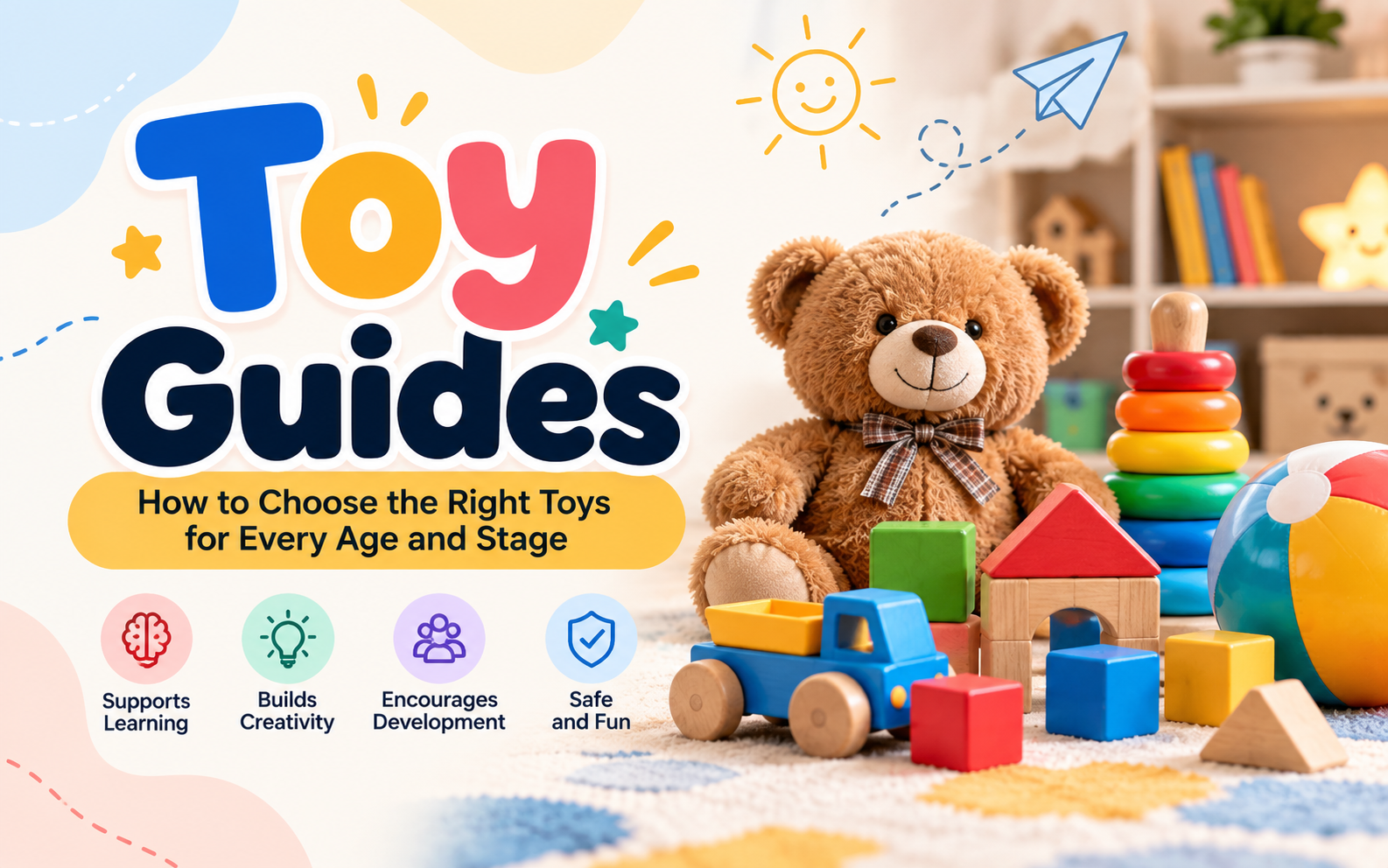
Toy Guides: How to Choose the Right Toys for Children
Choosing toys for children can be confusing, with so many options available. This beginner-friendly toy guide explains different types of toys, what to consider before buying, and how to find options that encourage creativity, learning and fun.
Introduction
Walk into a toy shop or browse an online store, and you will find hundreds of choices. There are colourful building blocks, soft toys, puzzles, remote-control cars, dolls, board games and electronic toys that light up or make sounds. With so many options, choosing the right toy for a child can take more thought than expected.
A good toy does not have to be expensive or complicated. Sometimes, a simple set of blocks can keep a child busy for hours, while an expensive toy may lose its appeal after a few days. What matters is whether the toy suits the child's age, interests, abilities and safety needs.
Toy guides help parents and caregivers understand the different types of toys available and make more informed choices. Whether you are buying a birthday gift, selecting an educational game or looking for something to keep children entertained at home, a few basic principles can make the process easier.
1. Why Toys Are Important for Children
Toys are more than a source of entertainment. They give children opportunities to explore, experiment and learn through play.
A toddler stacking blocks is learning about balance and shapes. A child playing with toy food may be practising everyday routines and developing language through pretend play. Older children playing board games can practise patience, decision-making and cooperation.
Different toys encourage different kinds of learning. However, children do not need a separate toy for every skill. Simple, safe activities can sometimes inspire just as much curiosity as specially designed educational products.
2. Types of Toys Every Parent Should Know About
Educational Toys
Educational toys introduce concepts such as numbers, letters, colours, shapes and basic science. Alphabet puzzles, counting games, matching cards and beginner science kits are common examples. Choose products that match the child's abilities and interests.
Building and Construction Toys
Building blocks, magnetic construction sets and age-appropriate model kits encourage children to create structures and experiment with different designs. These activities can support spatial reasoning, problem-solving and creativity. Always check for small parts and follow the manufacturer's age recommendations.
Pretend-Play Toys
Dolls, toy kitchens, doctor kits, toy tools and miniature shops allow children to act out situations they see around them. Pretend play can encourage storytelling, communication and imagination.
Outdoor and Physical Play Toys
Balls, skipping ropes, ride-on toys and age-appropriate sports equipment encourage movement and active play. Consider the child's coordination, available space and the protective equipment required.
Puzzles and Board Games
Puzzles encourage children to recognise patterns, notice details and work toward a goal. Board games can introduce turn-taking, simple strategy and following rules. Choose games that suit the child's attention span and experience.
3. Choosing Toys According to Age
Age is a useful starting point when selecting toys, but every child develops at a different pace. Interests, abilities and individual needs should also influence your decision.
Babies and Infants
Babies benefit from age-appropriate toys that encourage sensory exploration. Examples include washable soft toys, textured play items and simple rattles designed specifically for infants. Avoid small detachable parts, loose components and accessible button batteries.
Toddlers
Toddlers often enjoy stacking cups, large building blocks, simple shape sorters, push-and-pull toys and washable pretend-play items. Choose durable toys and avoid small parts that could pose a choking risk.
Preschool Children
Children around preschool age may enjoy puzzles, age-appropriate art supplies, pretend-play sets, simple matching games and basic construction toys. Give children opportunities to explore freely instead of expecting them to use every toy in one particular way.
School-Age Children
Older children may enjoy strategy games, sports equipment, science kits, advanced construction sets, craft projects and age-appropriate technology. Consider their personal interests when choosing a toy. Always follow the manufacturer's safety instructions.
4. How to Choose Safe Toys
Safety should come before appearance, popularity or price. Before purchasing, check the recommended age range, material quality, construction and warnings supplied by the manufacturer.
Look for loose parts, sharp edges, damaged components or pieces that could break off during normal use. For young children, be especially cautious with small objects, button batteries, powerful magnets and long cords.
Buy from reliable sellers and review product information carefully. In India, check applicable BIS standards and certification requirements for toys where relevant.
Inspect toys regularly, especially if they are frequently used or shared between children. Remember that even an age-appropriate toy may require adult supervision.
5. Are Expensive Toys Better Than Simple Toys?
Not necessarily. Price alone does not determine a toy's value. A simple set of wooden blocks, crayons or matching cards can offer many opportunities for creative play. A complicated electronic toy may have fewer uses once the child has explored its main features.
Before buying an expensive toy, ask yourself:
- Will the child enjoy using it more than once?
- Does it suit their current interests?
- Can it be used in different ways?
- Is it durable and easy to maintain?
- Does it offer good value for the available budget?
You can also rotate toys instead of keeping everything available at once. Putting a few toys away and bringing them back later may help renew a child's interest.
6. Educational Toys Versus Entertainment Toys
Educational toys are designed to introduce or practise particular concepts, while entertainment-focused toys primarily aim to provide enjoyment. In practice, the two categories often overlap.
A toy car may inspire imaginative stories and conversations. A board game may teach counting while entertaining the family. A building set may begin as a fun activity and gradually introduce ideas about structure and design.
There is no need to turn every play session into a lesson. Children also need time to relax, imagine and enjoy activities without a specific learning target. A balanced toy collection can include creative materials, puzzles, physical play equipment and toys chosen simply because the child enjoys them.
7. Simple Tips for Buying Toys on a Budget
Buying toys does not have to put pressure on the household budget. Set a spending limit before shopping and compare similar products. Check whether the price reflects durability, quality and useful features.
Consider toys that can be used in several ways. Building blocks, craft materials and simple board games can remain interesting as children invent new activities. Additional pieces for a toy set the child already owns may be more useful than an entirely new collection.
You can also explore libraries, community play groups or toy-sharing programmes where available. For second-hand toys, inspect cleanliness, damage, recalls and missing parts before allowing a child to use them.
Avoid buying a toy solely because it is trending online. A child's actual interests are usually a better guide than a popular advertisement.
Conclusion
Choosing the right toys becomes easier when you focus on a child's age, interests, safety and opportunities for play. Educational toys, building sets, puzzles, pretend-play items and outdoor equipment can all have a place in a child's routine.
You do not need the latest toy or the most expensive product to encourage learning and creativity. Simple toys can be just as engaging when they give children room to explore, imagine and solve problems.
Before buying anything, check the age recommendation, inspect the quality and think about how the child is likely to use it. Most importantly, remember that toys are only one part of a child's play experience. Time, encouragement and opportunities to explore the world around them matter too.
A thoughtful toy choice is not about finding the perfect product. It is about choosing something safe, enjoyable and suitable for the child who will use it.
Comments (0)
No comments yet. Share your thoughts below!
Leave a Comment