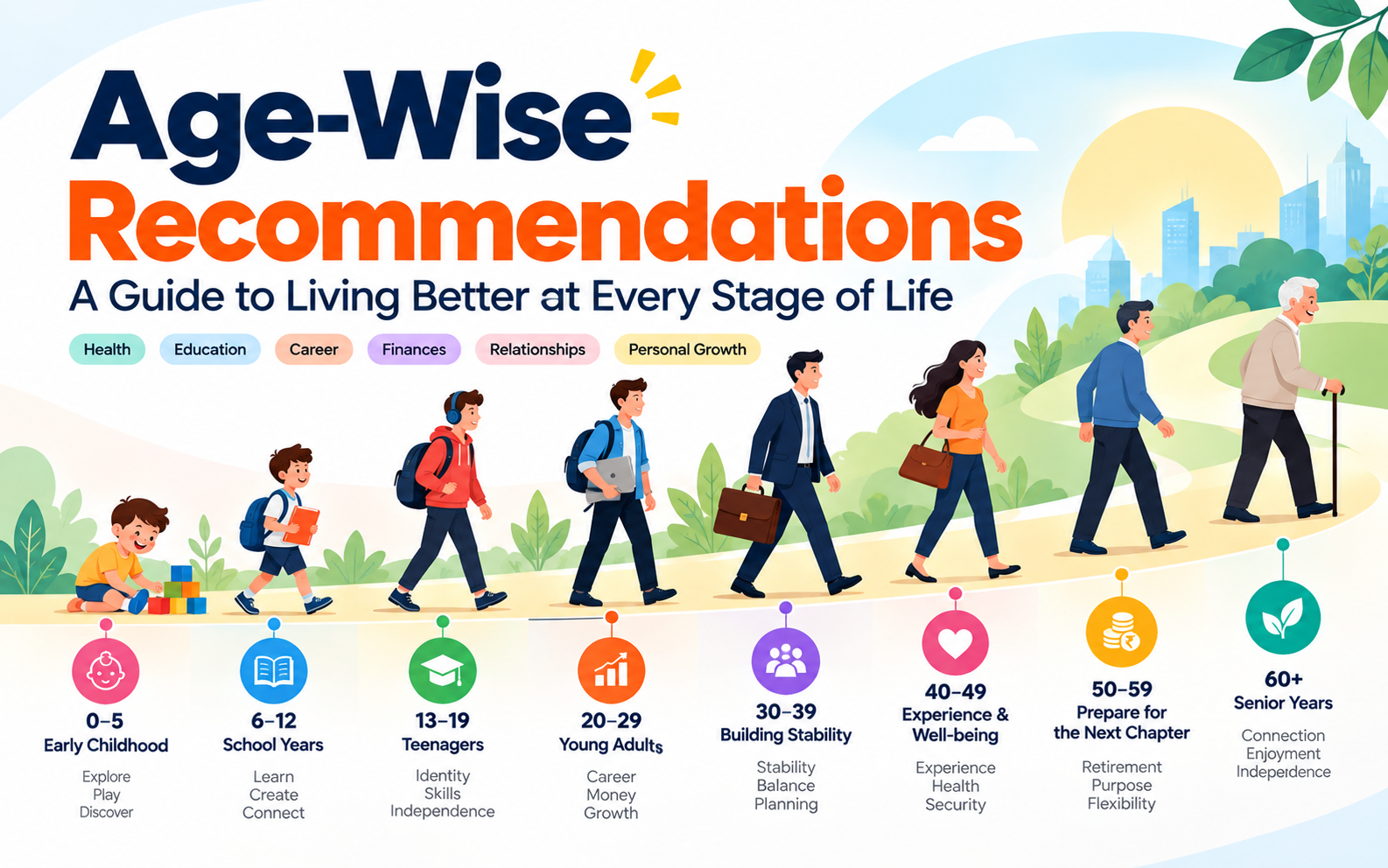
Age-Wise Recommendations: A Guide to Living Better at Every Stage of Life
Life is a journey of changing priorities. What a child needs to thrive is different from what a teenager needs to grow, and the goals of a young professional may look nothing like those of someone preparing for retirement. As we grow older, our responsibilities, interests and expectations change.
Age-wise recommendations offer a practical way to understand these changes. From education and career choices to health, money management and relationships, knowing what to focus on at different stages can help us make more thoughtful decisions.
The goal isn't to achieve everything by a certain age. It's to make choices that support the life you want to build.
1. Early Childhood: Ages 0–5 | Build the Foundation
The first few years of life are full of discovery. Children learn through everyday experiences, from listening to stories and recognising familiar faces to playing with toys and exploring their surroundings. At this stage, a safe environment, loving relationships and opportunities to explore matter more than academic pressure.
What deserves attention?
- Learning through play: Introduce puzzles, blocks, drawing and imaginative games that encourage curiosity.
- Language development: Read picture books, sing songs and talk to children throughout the day.
- Healthy routines: Establish suitable sleep, meal and activity routines.
- Emotional security: Respond patiently to feelings and help children feel safe asking for comfort.
- Small steps towards independence: Encourage age-appropriate tasks, such as putting toys away.
Every child develops at a different pace. Parents should focus on individual needs and consult a qualified professional if they have concerns about development.
2. School-Age Children: Ages 6–12 | Turn Curiosity into Confidence
School years introduce children to new subjects, friendships, responsibilities and challenges. They begin discovering what they enjoy and where they need more support. The best approach is to encourage learning without making every result a competition.
- Develop good study habits: Encourage regular homework, reading and revision instead of last-minute preparation.
- Explore interests: Give children opportunities to try sports, music, art, science activities and other hobbies.
- Build social skills: Teach kindness, teamwork, communication and respect for others.
- Introduce digital safety: Explain privacy, safe browsing and the importance of speaking up about uncomfortable online experiences.
- Encourage responsibility: Let children organise their school bags and complete simple household tasks.
3. Teenagers: Ages 13–19 | Discover Your Direction
Teenage years often bring important questions about education, friendships, identity and the future. Academic expectations can feel overwhelming, especially when students are expected to make career decisions before they have explored many options.
This is a good time to understand personal strengths and interests while building habits that will be useful in adulthood.
- Explore career options: Research different professions, college courses, vocational training and emerging fields.
- Learn how to learn: Practise active recall, create realistic timetables and solve sample questions.
- Build financial awareness: Understand budgeting, saving, spending choices and the basics of banking.
- Develop emotional awareness: Learn healthy ways to manage stress and seek help when necessary.
- Use technology wisely: Be mindful of screen time, online privacy and the effect of social media comparisons.
Teenagers do not need a complete life plan. They need opportunities to experiment, ask questions and make increasingly independent decisions with appropriate guidance.
4. Young Adults: Ages 20–29 | Build Skills and Financial Independence
Your twenties can bring significant changes: completing education, finding a first job, starting a business, moving to another city or learning to manage expenses independently. It is an important period for building a foundation, but there is no universal timeline for success.
Focus on your career
Develop practical skills, improve communication and gain experience through employment, internships, independent projects or entrepreneurship. Choose opportunities based on your abilities, interests and financial needs rather than following trends blindly.
Make money decisions carefully
Track your expenses, save consistently where possible and work towards an emergency fund. Learn about taxes, insurance, credit and investment risks before making major financial decisions.
Build a life outside work
Maintain friendships, pursue hobbies and learn to manage your time. Professional growth is important, but so are relationships, rest and personal interests.
There is no need to own a home, earn a particular salary or reach every personal milestone before turning 30. Progress that fits your circumstances is more meaningful than a deadline imposed by others.
5. Ages 30–39 | Create Stability Without Losing Yourself
For many people, their thirties involve balancing professional ambitions with family responsibilities, financial commitments and personal goals. Others may be changing careers, building businesses or exploring a completely different direction.
- Review your career: Consider whether your work offers the growth, income and flexibility you need.
- Strengthen financial habits: Review savings, debt, insurance and long-term financial goals.
- Prioritise preventive health: Maintain physical activity and discuss appropriate check-ups with a healthcare professional.
- Protect personal time: Make room for relationships, hobbies and rest instead of allowing work to occupy every available hour.
- Update your goals: Your priorities may have changed since your twenties, and your plans can change with them.
Stability does not mean having every part of life figured out. It means building habits and support systems that help you manage change.
6. Ages 40–49 | Make Experience Work for You
Your forties may bring greater professional experience and a clearer understanding of your strengths. They can also bring heavier family responsibilities and the need to think more carefully about the future.
- Review retirement savings and long-term financial commitments.
- Continue developing professional skills as industries and technologies change.
- Maintain regular exercise and follow appropriate healthcare advice.
- Build strong relationships with family, friends and your wider community.
- Reassess spending habits and make room for meaningful personal interests.
This is a useful time to ask yourself an important question: Does the way I spend my time reflect what matters most to me? The answer can help you make more deliberate choices for the years ahead.
7. Ages 50–59 | Prepare for the Next Chapter
The fifties can be a valuable period for preparing financially and personally for the years ahead. Some people continue growing their businesses or careers, while others begin considering retirement or new interests.
- Review retirement plans: Estimate future income and expenses, and reassess savings and outstanding debts.
- Check your insurance: Understand whether your existing coverage meets your current needs.
- Maintain your health: Follow recommended screenings and discuss health concerns with qualified professionals.
- Share your experience: Mentor younger colleagues, support family members or contribute to community projects.
- Explore new interests: Make time for travel, learning, creative activities or goals that have been postponed.
Preparing for retirement involves more than money. Consider how you want to spend your time, maintain social connections and find satisfaction outside your professional identity.
8. Ages 60 and Above | Focus on Well-being and Meaning
Later life can bring opportunities to spend more time with loved ones, revisit old interests and share knowledge gained through experience. Older adults have different needs and ambitions, so recommendations should reflect individual health, preferences and circumstances.
- Stay active in suitable ways: Choose physical activities that match your abilities and follow medical guidance where needed.
- Keep learning: Reading, gardening, creative projects and community activities can provide enjoyment and mental stimulation.
- Maintain social connections: Make time for friends, relatives and groups that offer companionship.
- Protect financial security: Understand pension arrangements, healthcare costs and available benefits. Be cautious about unsolicited financial offers.
- Support independence: Review home safety, transport and access to essential services as needs change.
Growing older does not mean giving up curiosity or ambition. New interests, friendships and meaningful experiences can begin at any age.
9. Habits Worth Keeping at Every Age
Although priorities change throughout life, some habits remain useful whether you are 18, 38 or 78.
Keep learning
Read, ask questions and develop skills that help you adapt to new situations. Learning does not have to end when formal education finishes.
Look after your health
Make time for sleep, suitable physical activity, balanced meals and appropriate healthcare. Small, sustainable habits are easier to maintain than extreme routines.
Be intentional with money
Understand your income, spending and financial responsibilities. Avoid decisions driven entirely by social pressure or the desire to impress others.
Invest in relationships
Make time for people who offer mutual respect, encouragement and companionship. Strong relationships often require attention just as careers and finances do.
Give yourself permission to change
Goals that once mattered may become less important, while new priorities emerge. Reviewing your plans is a sensible response to changing circumstances, not a sign of failure.
Conclusion: Your Life Is Not a Race Against Age
Age-wise recommendations can help you identify useful priorities at different stages of life, from childhood learning and teenage independence to career development, financial planning and well-being in later years.
However, age should never be treated as a fixed deadline. People grow, learn, recover, change careers, build relationships and discover new ambitions at different times. Your family circumstances, health, resources and personal interests all influence the choices available to you.
Instead of asking whether you have achieved everything expected at your age, ask a more useful question: What can I do now to make my life healthier, more secure and more meaningful?
Choose one realistic goal, take a practical step towards it and review your progress as life changes. You do not need to have everything figured out. You just need a direction that makes sense for you today.
Comments (0)
No comments yet. Share your thoughts below!
Leave a Comment